Entropy Made Me Do It: Turbines, Compressors, and Other Second-Law Shenanigans (Part 1)
![]()
Introduction
These videos, Entropy Made Me Do It, Part 1 and Part 2 derive the equations for common items in power and refrigeration machinery.
- the turbine or expander
- the adiabatic compressor
- the isothermal compressor
- the pump
- the nozzle
- the valve or throttle
Up First
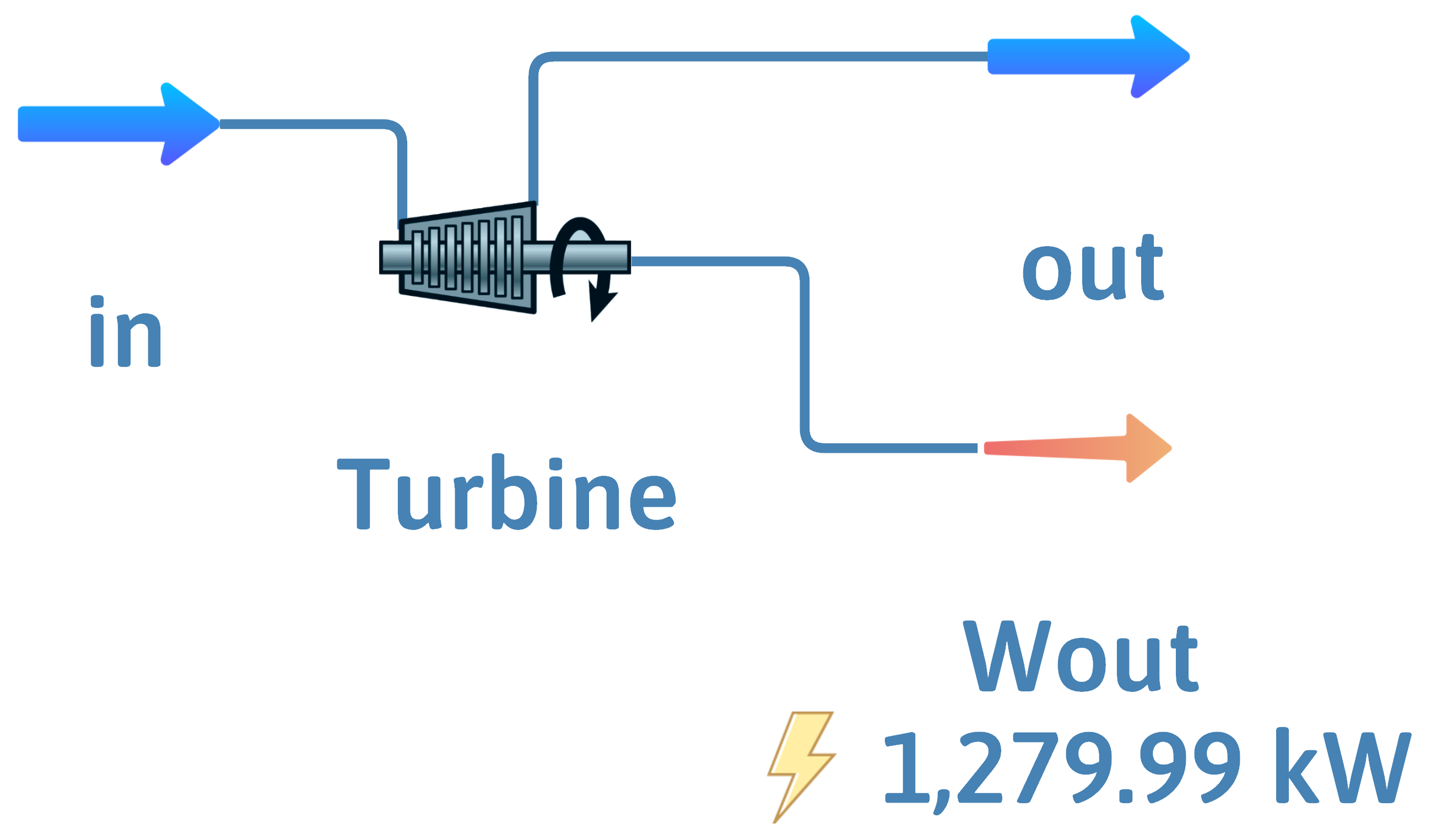
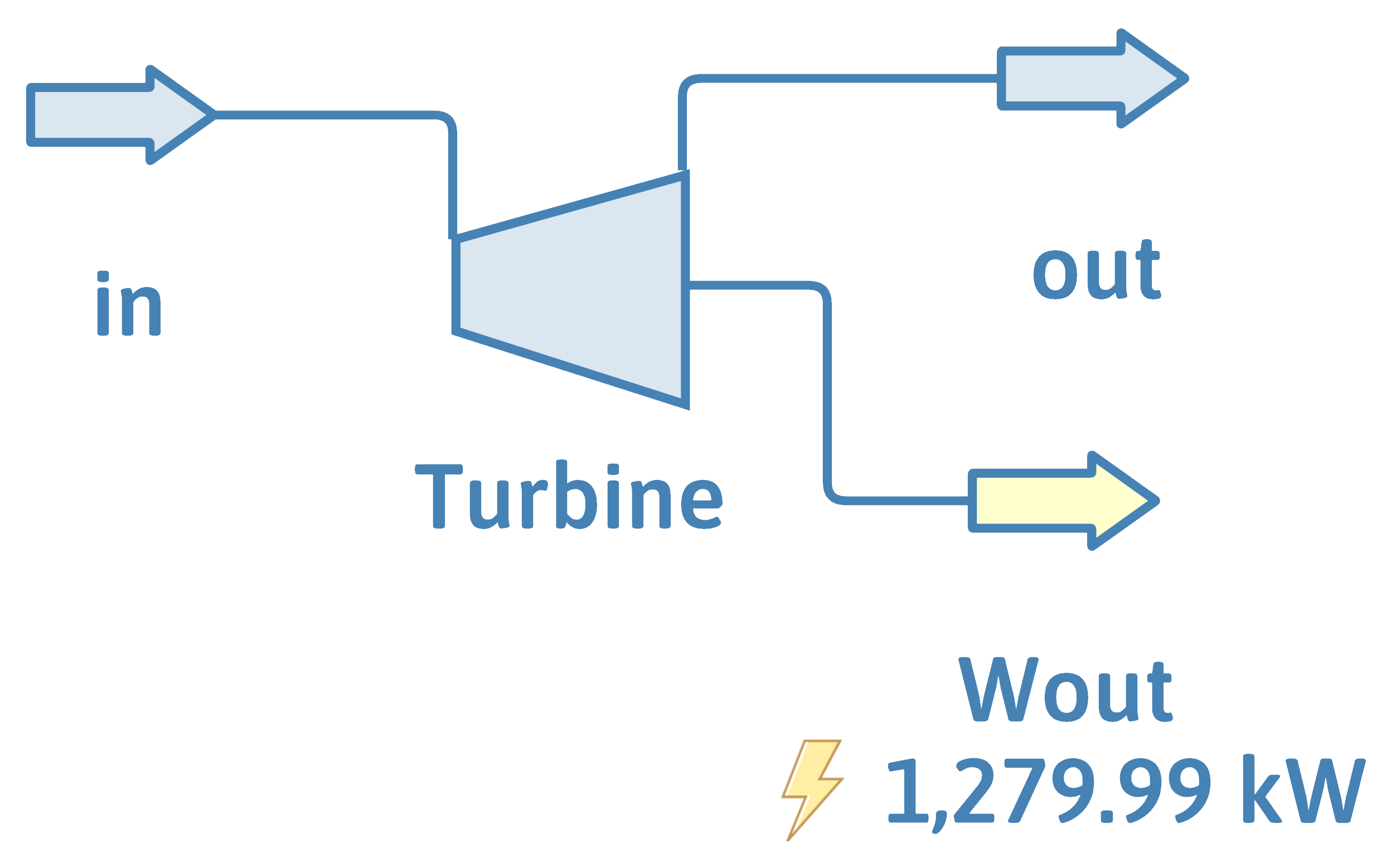
Turbine – Steam or Combustion Gases
Expander – Compressed Gases
![]()
![]()
Inputs – \(\dot{m}\) or \(\dot{n}\), \(T\) and \(P\)
Outputs – \(\dot{m}\) or \(\dot{n}\), \(T\) or \(P\)
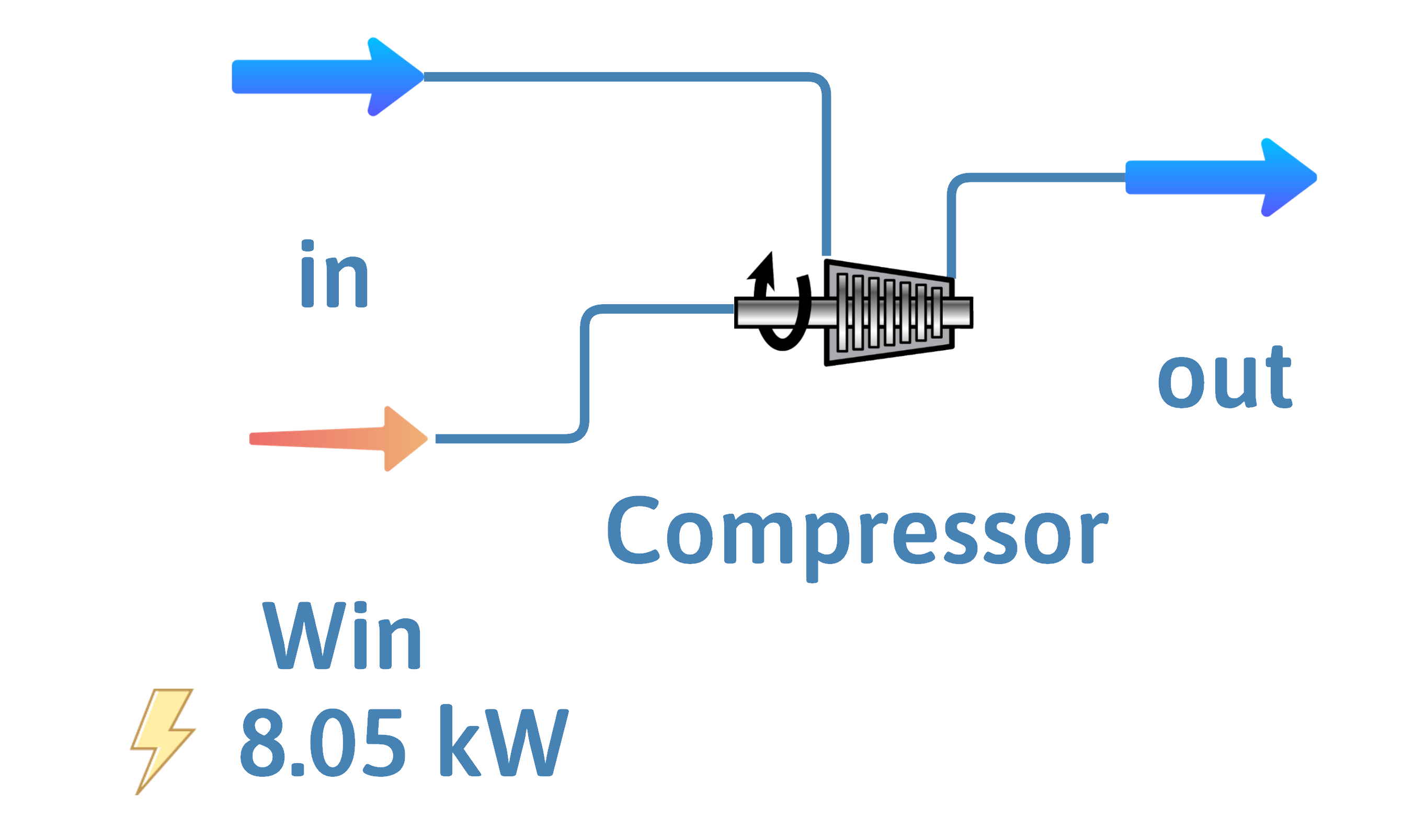
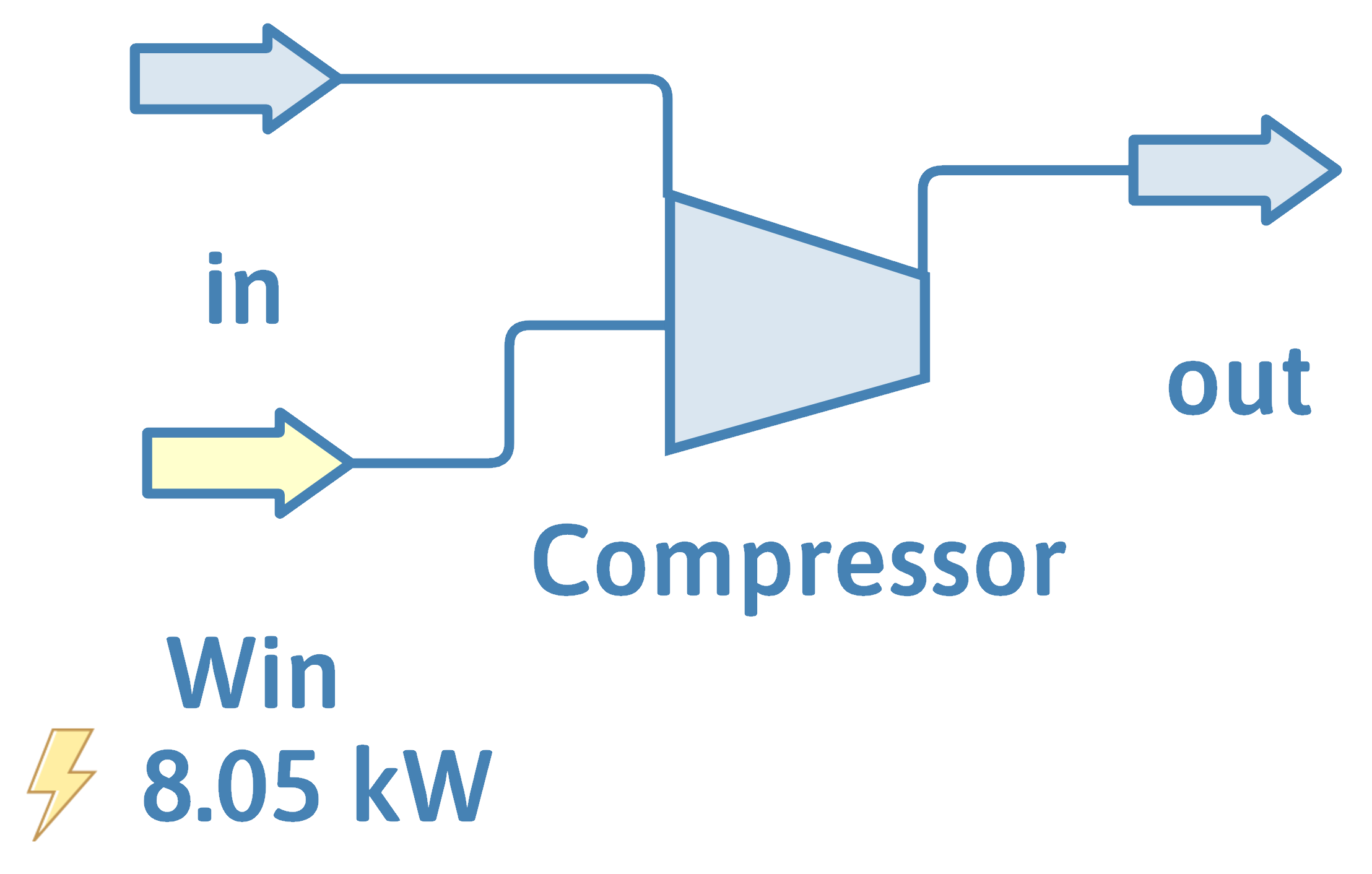
Compressor
![]()
![]()
Goal is pressure increase of gas
Inputs – \(\dot{m}\) or \(\dot{n}\), \(T\) and \(P\)
Outputs – \(\dot{m}\) or \(\dot{n}\), \(P\)
Turbine or Expander
![]()
![]()
National Archives and Records Administration, Public domain, via Wikimedia Commons
Turbine or Expander
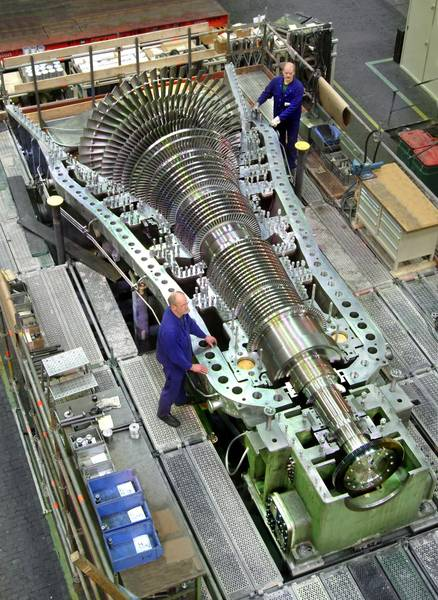
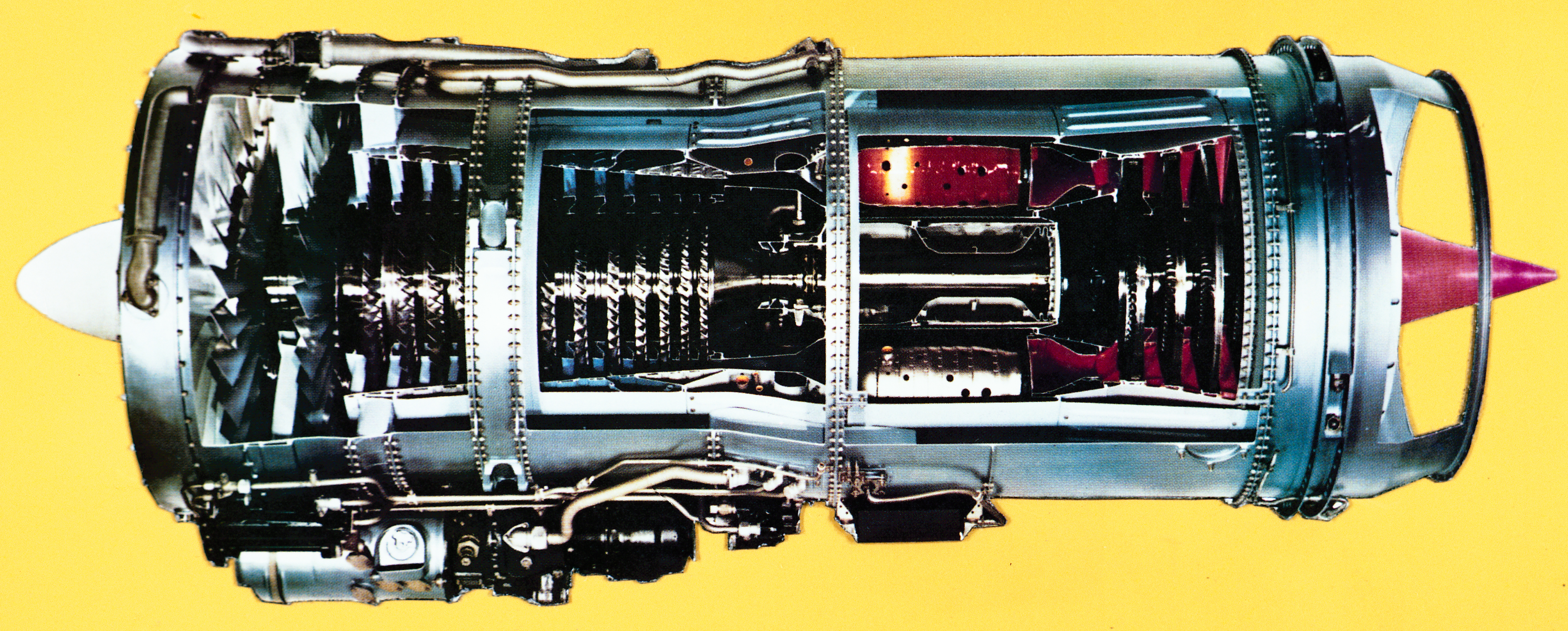
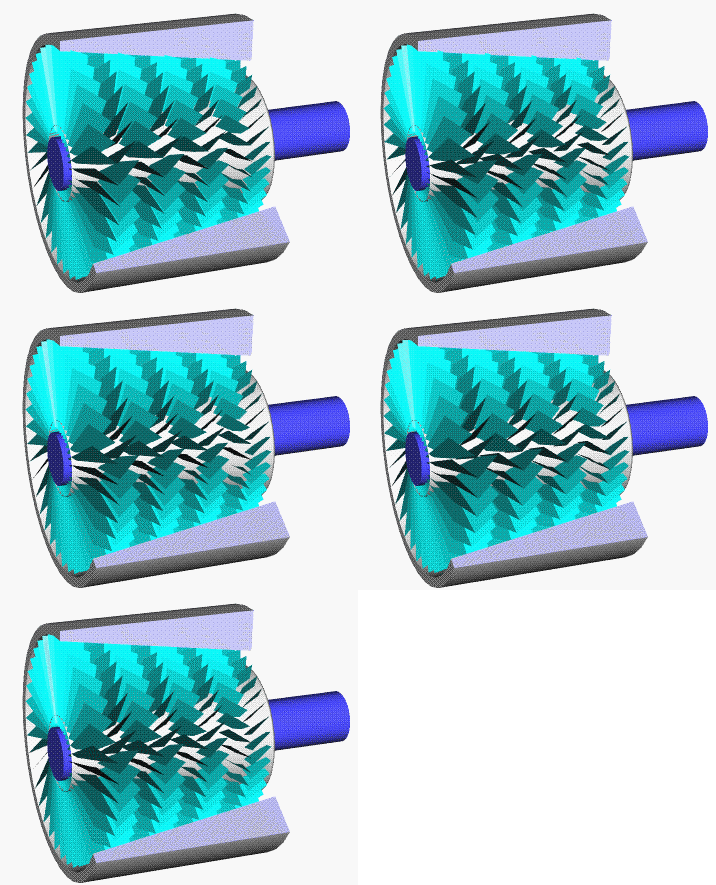
A turbine or expander takes a high-temperature and high-pressure steam or gas mixture and sends it through a series of blades, called stator blades and rotor blades, and expands it to create power or shaft work.
\[\Delta \dot{H} = \dot{W}_s = \dot{m} \Delta \hat{H} = \dot{m} (\hat{H}_\mathrm{out} - \hat{H}_\mathrm{in})\]
\[\Delta \dot{H} = \dot{W}_s = \dot{n} \Delta \hat{H} = \dot{n} \int\limits_{T_\mathrm{in}}^{T_\mathrm{out}} C_p dT = \dot{n} C_p (T_\mathrm{out} - T_\mathrm{in})\]
Turbine or Expander
A real turbine has a turbine efficiency, that compares its performance with that of an isentropic turbine.
\[\eta_\mathrm{turbine} = \frac{\dot{W}_{s\text{-actual}}}{\dot{W}_{s\text{-isentropic}}} = \frac{\Delta \hat{H}_{\text{actual}}}{\Delta \hat{H}_{\text{isentropic}}}\]
Calculating the isentropic values
\[\hat{S}_\mathrm{out} = \hat{S}_\mathrm{in}\]
\[x = \dfrac{\hat{S}_\mathrm{in}-\hat{S}_l}{\hat{S}_v-\hat{S}_l}\]
To calculate the outlet enthalpy
\[\hat{H}_\mathrm{out} = x \hat{H}_v + (1 - x) \hat{H}_l\]
\[\Delta \hat{H}_\mathrm{isentropic} = \hat{H}_\mathrm{out} - \hat{H}_\mathrm{in}\]
\[\Delta \hat{S} = 0 = C_p \ln \frac{T_\mathrm{out}}{T_\mathrm{in}} - R \ln \frac{P_\mathrm{out}}{P_\mathrm{in}}\]
\[C_p \ln \frac{T_\mathrm{out}}{T_\mathrm{in}} = R \ln \frac{P_\mathrm{out}}{P_\mathrm{in}}\ \ \ \ \text{or}\ \ \ \ \frac{T_\mathrm{out}}{T_\mathrm{in}} = \left(\frac{P_\mathrm{out}}{P_\mathrm{in}}\right)^\frac{R}{C_p}\]
Substitute in for \(\Delta T\).
\[
\Delta \hat{H}_\mathrm{isentropic} = C_p \Delta T = C_p (T_\mathrm{out} - T_\mathrm{in}) = C_p T_\mathrm{in} \left[\left(\frac{P_\mathrm{out}}{P_\mathrm{in}}\right)^\frac{R}{C_p} - 1\right]
\]
Calculating actual properties
\[\eta_\mathrm{turbine} = \frac{\Delta \hat{H}_{\text{actual}}}{\Delta \hat{H}_{\text{isentropic}}}\]
\[\hat{H}_{\text{out-actual}} = \eta_\mathrm{turbine} \Delta \hat{H}_{\text{isentropic}} + \hat{H}_{\text{in}}\]
Calculating actual quality and entropy for steam
\[x_\mathrm{actual} = \dfrac{\hat{H}_\text{out-actual}-\hat{H}_l}{\hat{H}_v-\hat{H}_l}\]
\[\hat{S}_\text{out-actual}=x_\mathrm{actual}\hat{S}_v + (1 - x_\mathrm{actual}) \hat{S}_l\]
Calculating actual properties
\[\eta_\mathrm{turbine} = \frac{\Delta \hat{H}_{\text{actual}}}{\Delta \hat{H}_{\text{isentropic}}}\]
\[\Delta \hat{H}_{\text{actual}} = \eta_\mathrm{turbine} \Delta \hat{H}_{\text{isentropic}}\]
\[\Delta \hat{H}_{\text{actual}} = C_p \Delta T_\text{actual}\]
\[T_\text{out-actual} = \frac{\Delta \hat{H}_{\text{actual}} }{C_p} + T_\mathrm{in}\]
\[\Delta \hat{S}_{\text{actual}} = C_p \ln \frac{T_\text{out-actual}}{T_\text{in}} - R \ln \frac{P_\text{out}}{P_\text{in}}\]
Compressor
Ideal Gas only in introductory videos. Two-phase compressors are rare.
![]()
NASA, Public domain, via Wikimedia Commons
Adiabatic Compressor
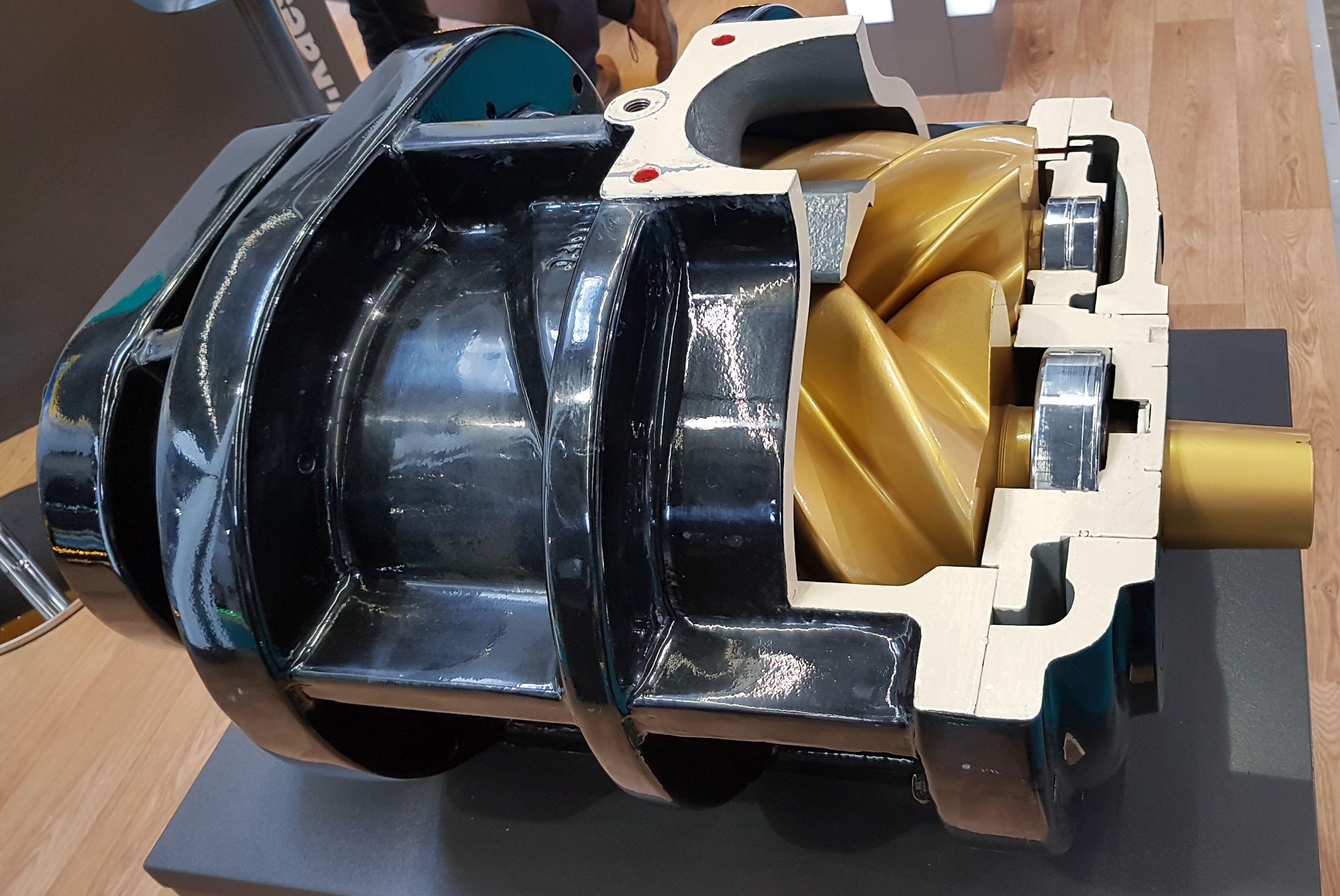
A real adiabatic compressor has a compressor efficiency, that compares its performance with that of an isentropic compressor.
\[\eta_\mathrm{compressor} = \frac{\dot{W}_{s\text{-isentropic}}}{\dot{W}_{s\text{-actual}}} = \frac{\Delta \hat{H}_{\text{isentropic}}}{\Delta \hat{H}_{\text{actual}}}\]
\[\Delta \dot{H}_\mathrm{isentropic} = \dot{W}_{s\text{-isentropic}} = \dot{n} \int\limits_{T_\mathrm{in}}^{T_\mathrm{out}} C_p dT = \dot{n} C_p \Delta T\]
\[\Delta \hat{S}_\mathrm{air} = \int\limits_{T_\mathrm{in}}^{T_\mathrm{out}} \frac{C_p}{T} dT - R \ln \frac{P_\mathrm{out}}{P_\mathrm{in}}= C_p \ln \frac{T_\mathrm{out}}{T_\mathrm{in}} - R \ln \frac{P_\mathrm{out}}{P_\mathrm{in}}\]
Minimum work for \(\Delta \hat{S} = 0\)
\[C_p \ln \frac{T_\mathrm{out}}{T_\mathrm{in}} = R \ln \frac{P_\mathrm{out}}{P_\mathrm{in}}\ \ \ \ \text{or}\ \ \ \ \frac{T_\mathrm{out}}{T_\mathrm{in}} = \left(\frac{P_\mathrm{out}}{P_\mathrm{in}}\right)^\frac{R}{C_p}\]
Plug \(T_\mathrm{out}\) back into 1st Law.
\[\dot{W}_{s\text{-isentropic}} = \dot{n} C_p \Delta T\]
Calculate work and final enthalpy from efficiency
\[\dot{W}_{s\text{-actual}} = \frac{\dot{W}_{s\text{-isentropic}}}{\eta_\mathrm{compressor}}\ \ \ \ \text{and}\ \ \ \ \Delta \hat{H}_{\text{actual}} = \frac{\Delta \hat{H}_{\text{isentropic}}}{\eta_\mathrm{compressor}}\]
If necessary, you can calculate actual outlet \(T\) and entropy change.
Isothermal Compressor
A cooling-water jacket is often used to attempt to maintain the compressor at a constant temperature. An isothermal compressor uses much less power than an isentropic compressor, at the cost of a cooling system. A real isothermal compressor has a compressor efficiency, that compares its performance with that of an isothermal compressor.
\[\eta_\mathrm{compressor} = \frac{\dot{W}_{s\text{-isothermal}}}{\dot{W}_{s\text{-actual}}}\]
\[\Delta \dot{H}_\text{iso} = 0\ \ \ \ \text{and}\ \ \ \ \dot{Q} = - \dot{W}_{s\text{-iso}} = \dot{n} RT \ln \frac{P_1}{P_2}\]
There is no need for the 2nd Law. Use the efficiency to calculate the actual work
\[\dot{W}_{s\text{-actual}} = \frac{\dot{W}_{s\text{-isothermal}}}{\eta_\mathrm{compressor}}\]
If necessary, you can calculate actual enthalpy change, outlet \(T\), and entropy change.
The Takeaways
- Adiabatic Turbines and compressors have efficiencies that compare the real or actual case with the isentropic case.
- Isothermal compressors have efficiencies that compare the real or actual case with the isothermal case.
- We have shown how to calculate turbines and expanders for both steam and ideal gas.
- We have shown how to calculate compressors for ideal gas only.