Can You Tell an Azeotrope from a Peritectic? Get Your Phase Diagrams Right! Part 2
DOFPro Team
Liquid-Liquid Extraction
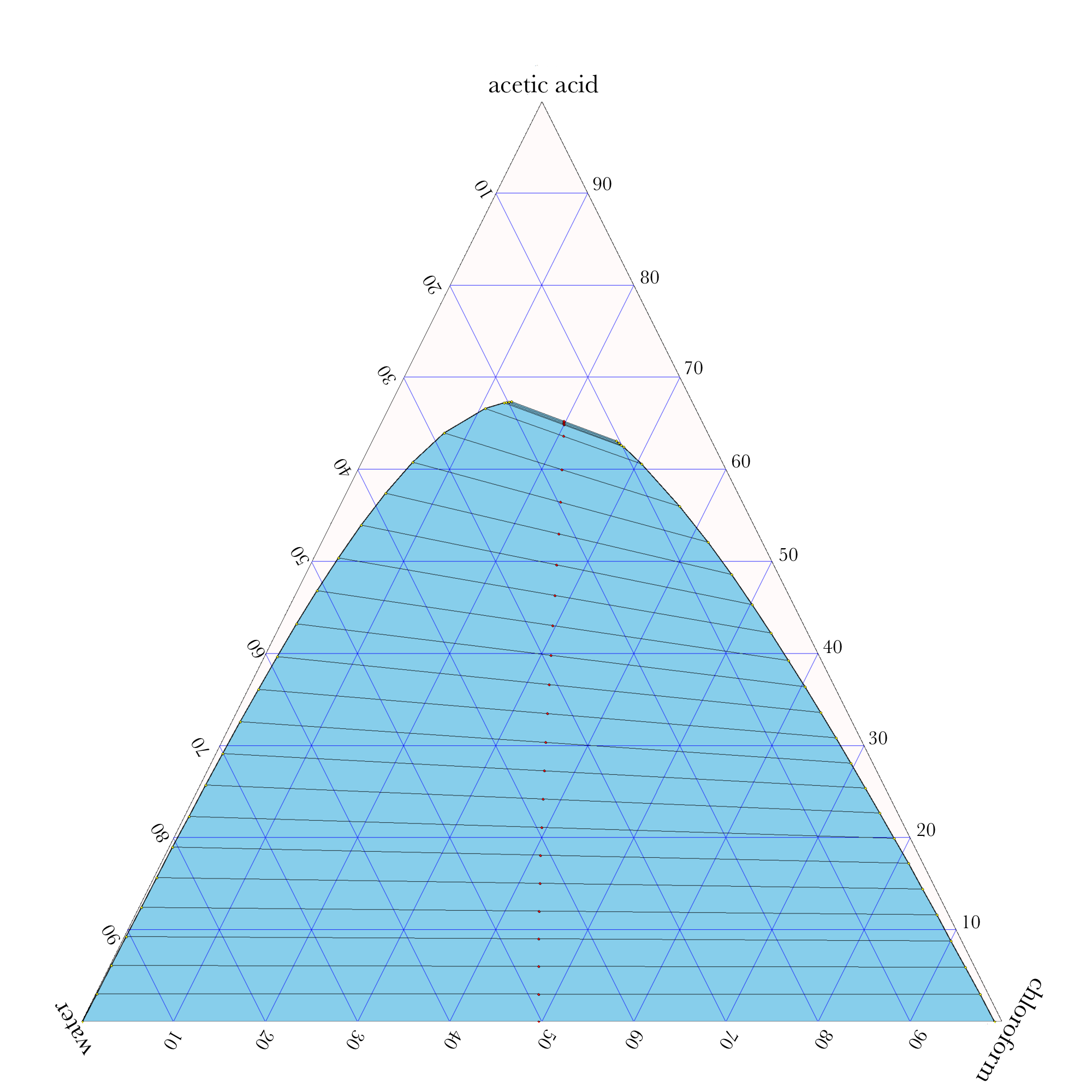
Liquid-Liquid Extraction
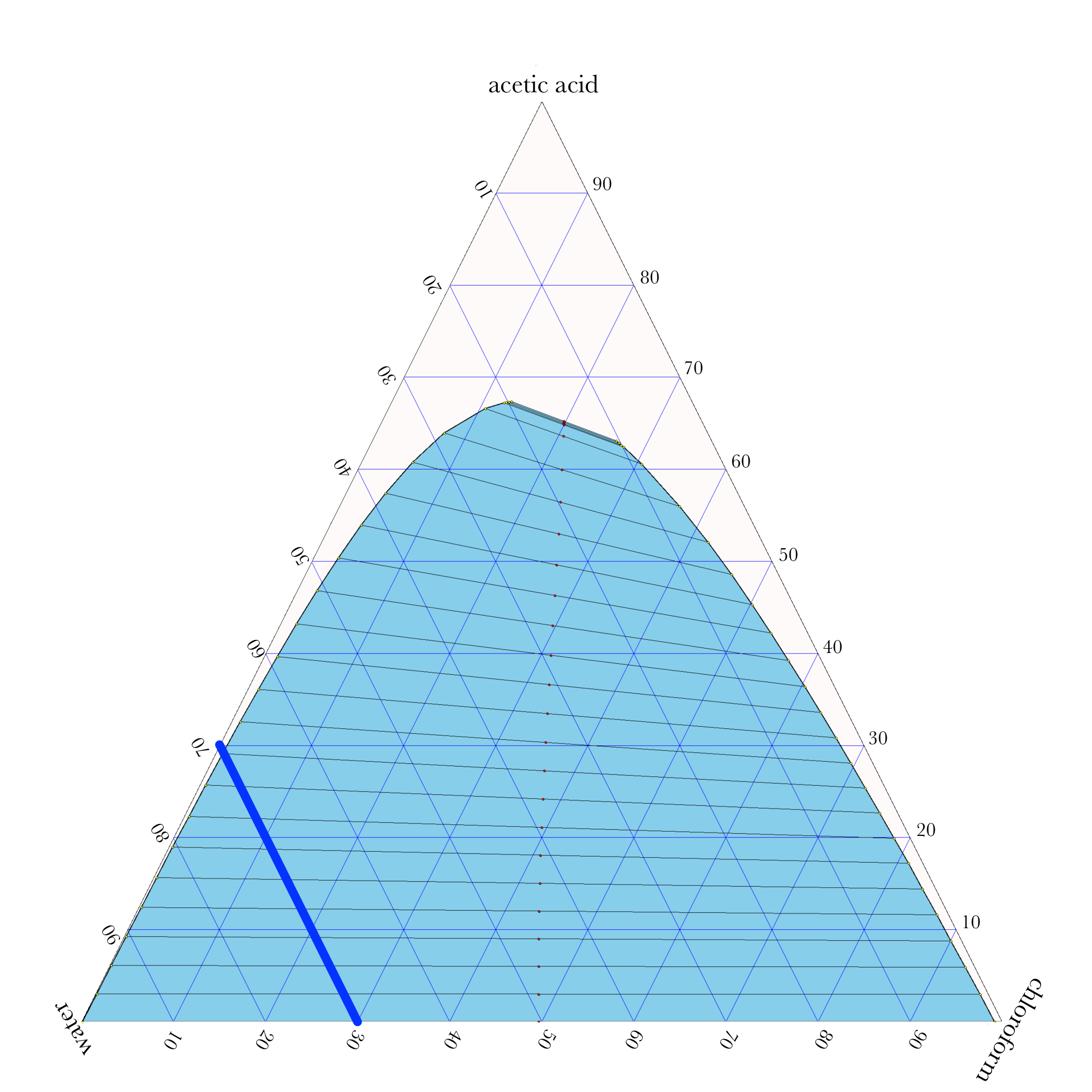
Liquid-Liquid Extraction
Liquid-Liquid Extraction
Liquid-Liquid Extraction
Liquid-Liquid Extraction
Liquid-Liquid Extraction
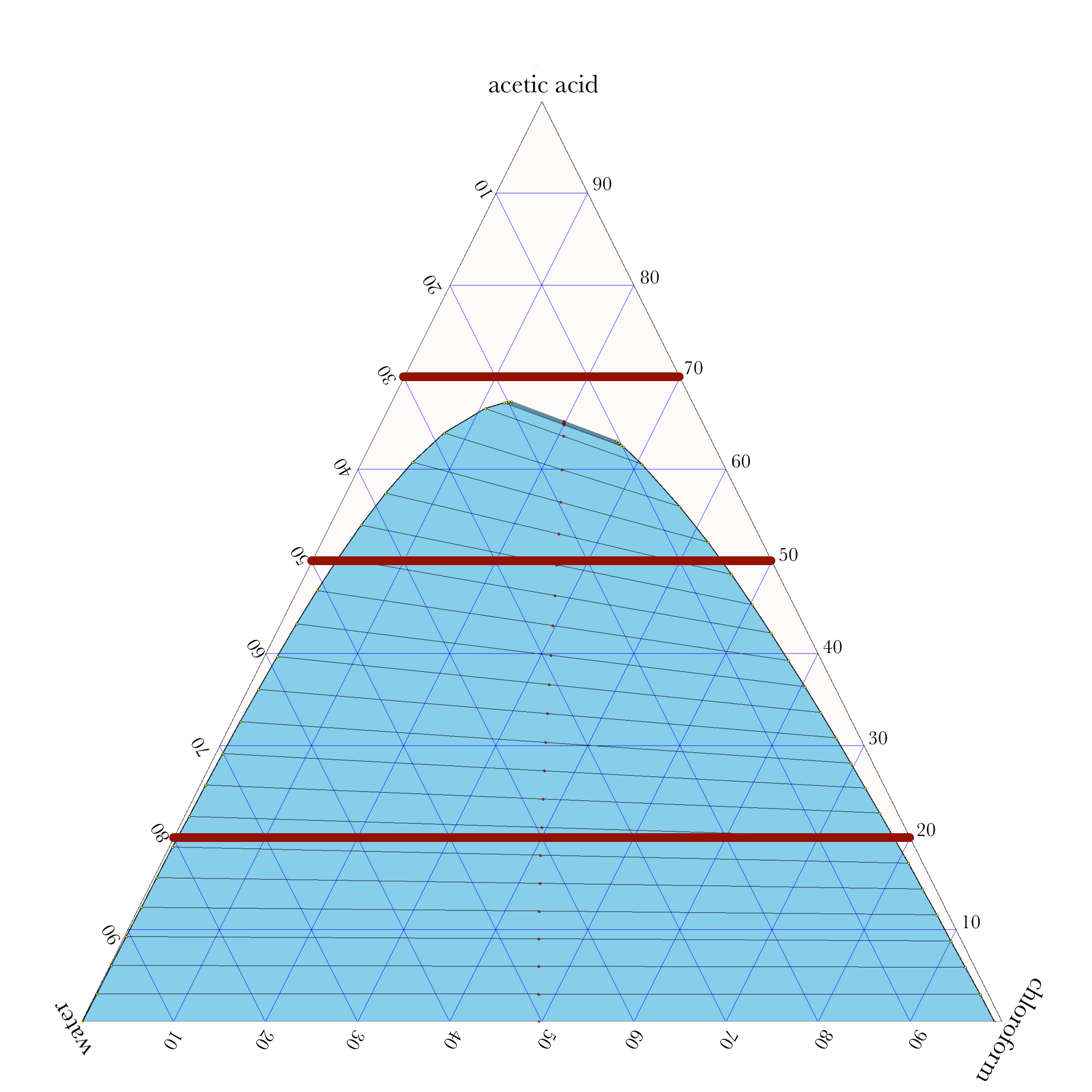
Liquid-Liquid Extraction
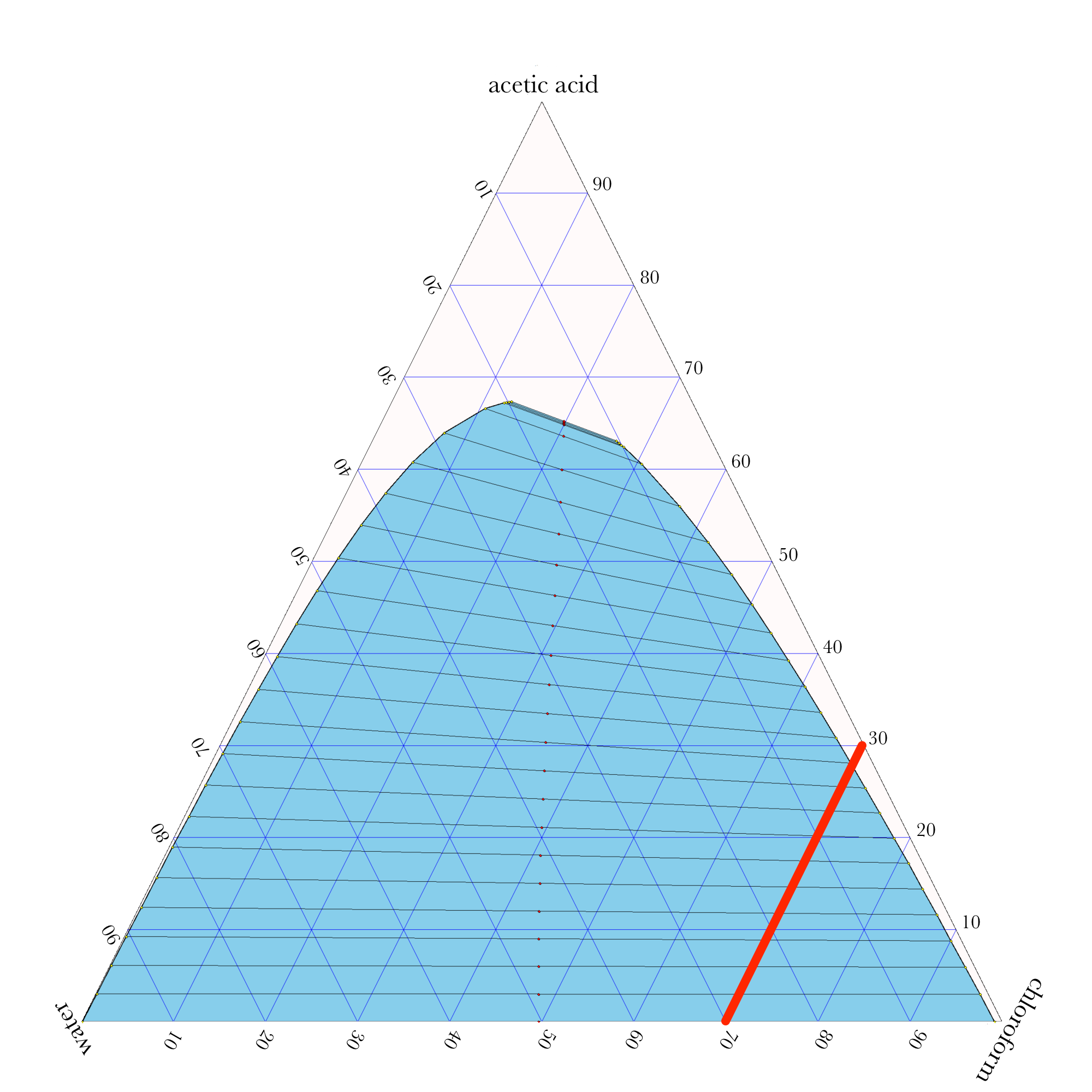
Liquid-Liquid Extraction
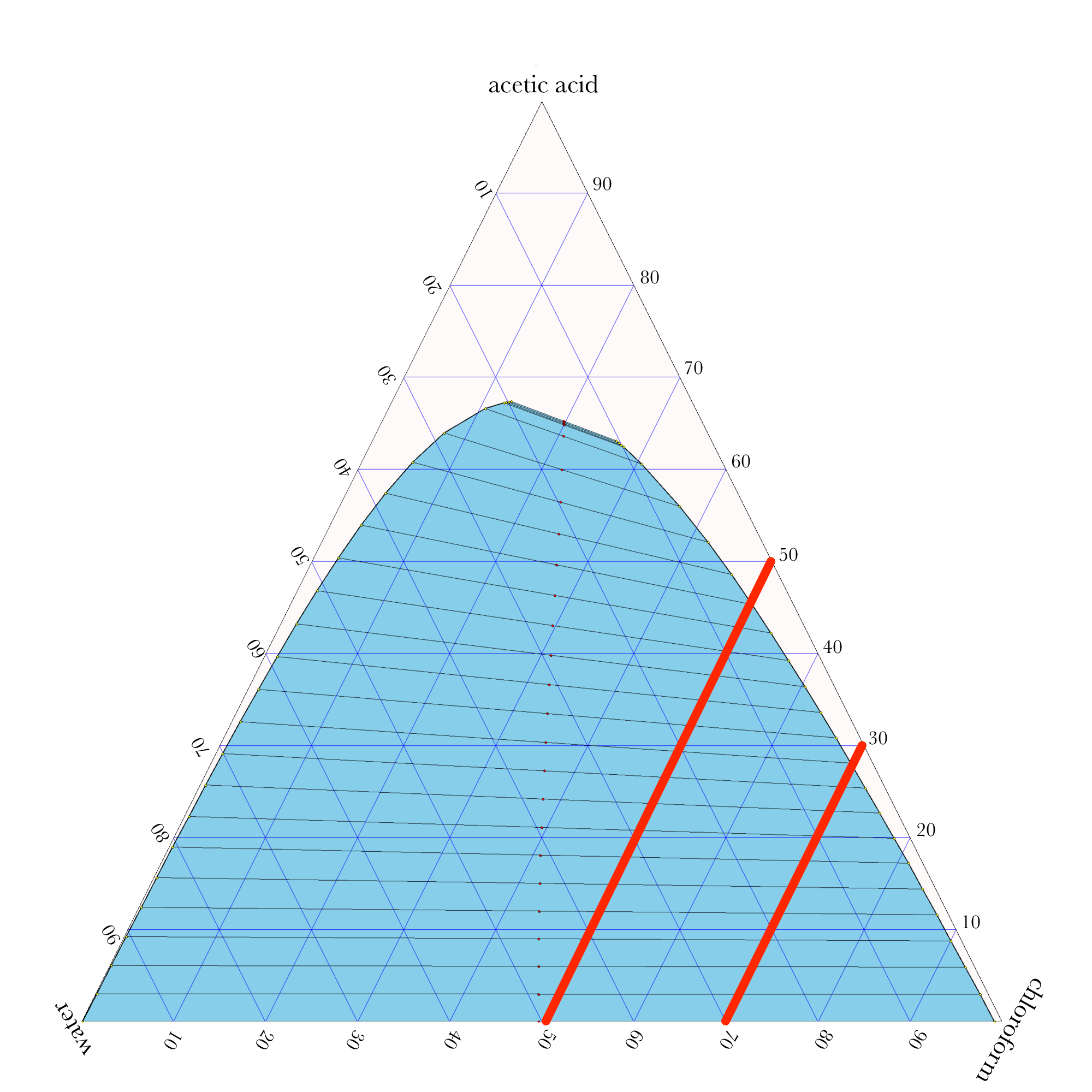
Liquid-Liquid Extraction
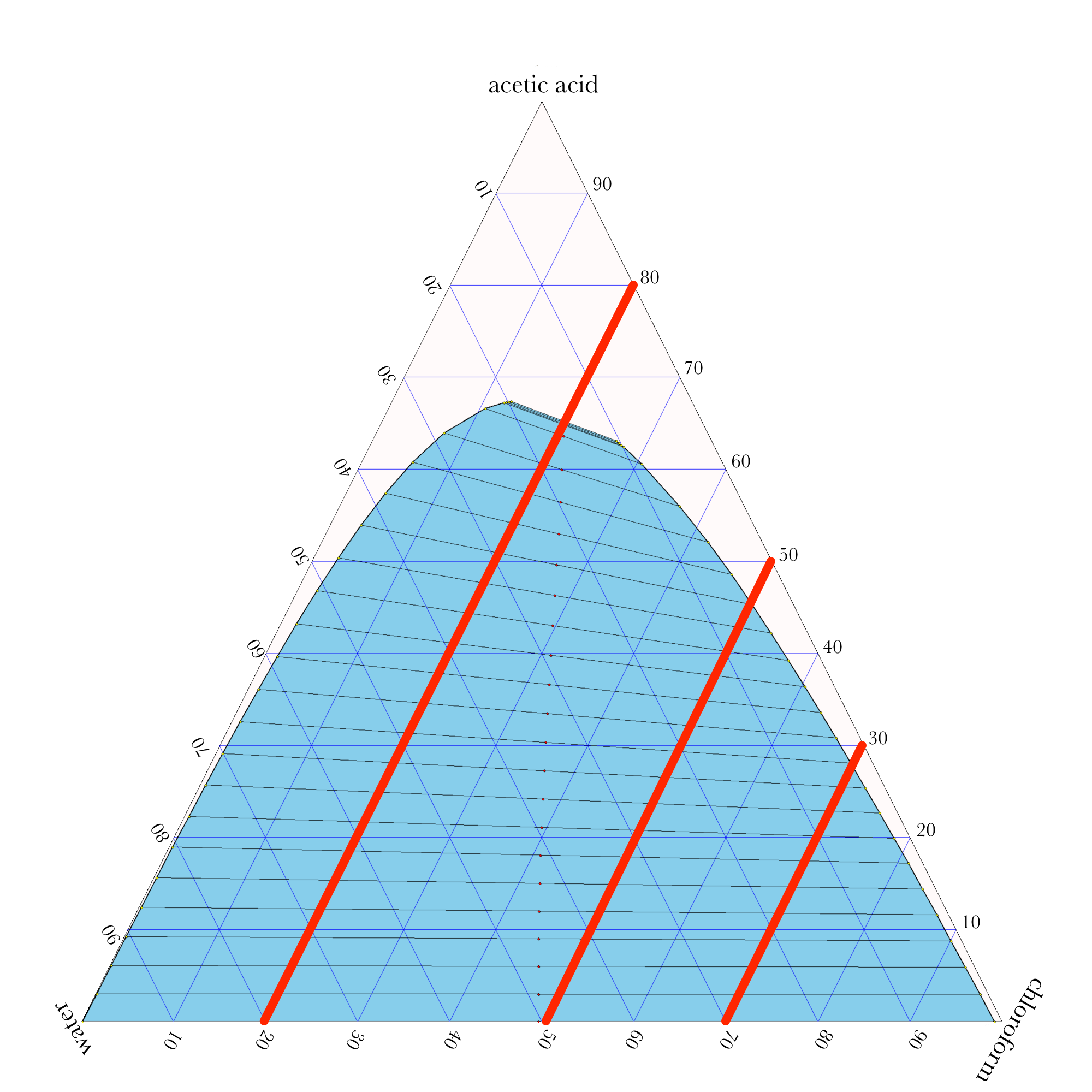
Liquid-Liquid Extraction
Liquid-Liquid Extraction
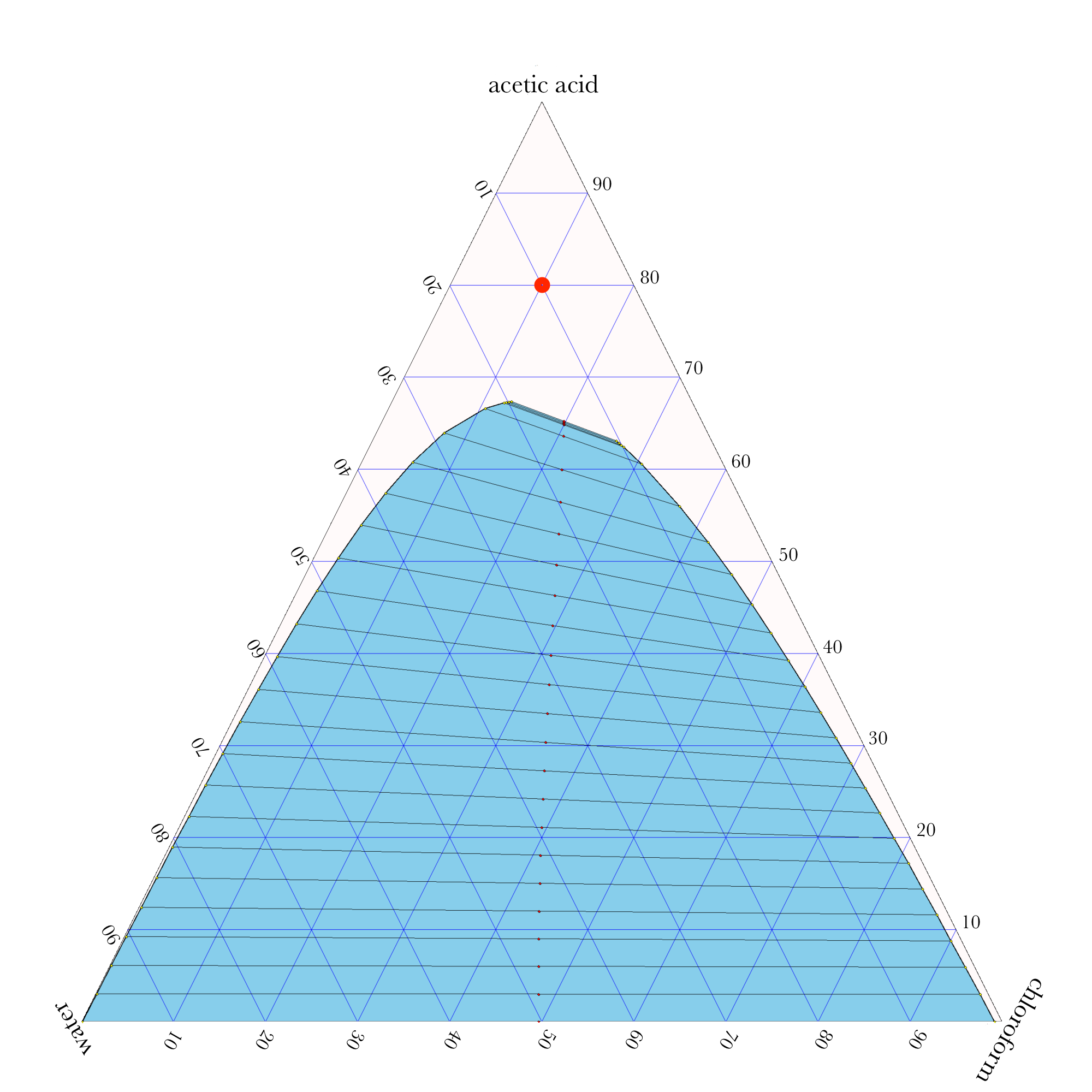
Liquid-Liquid Extraction
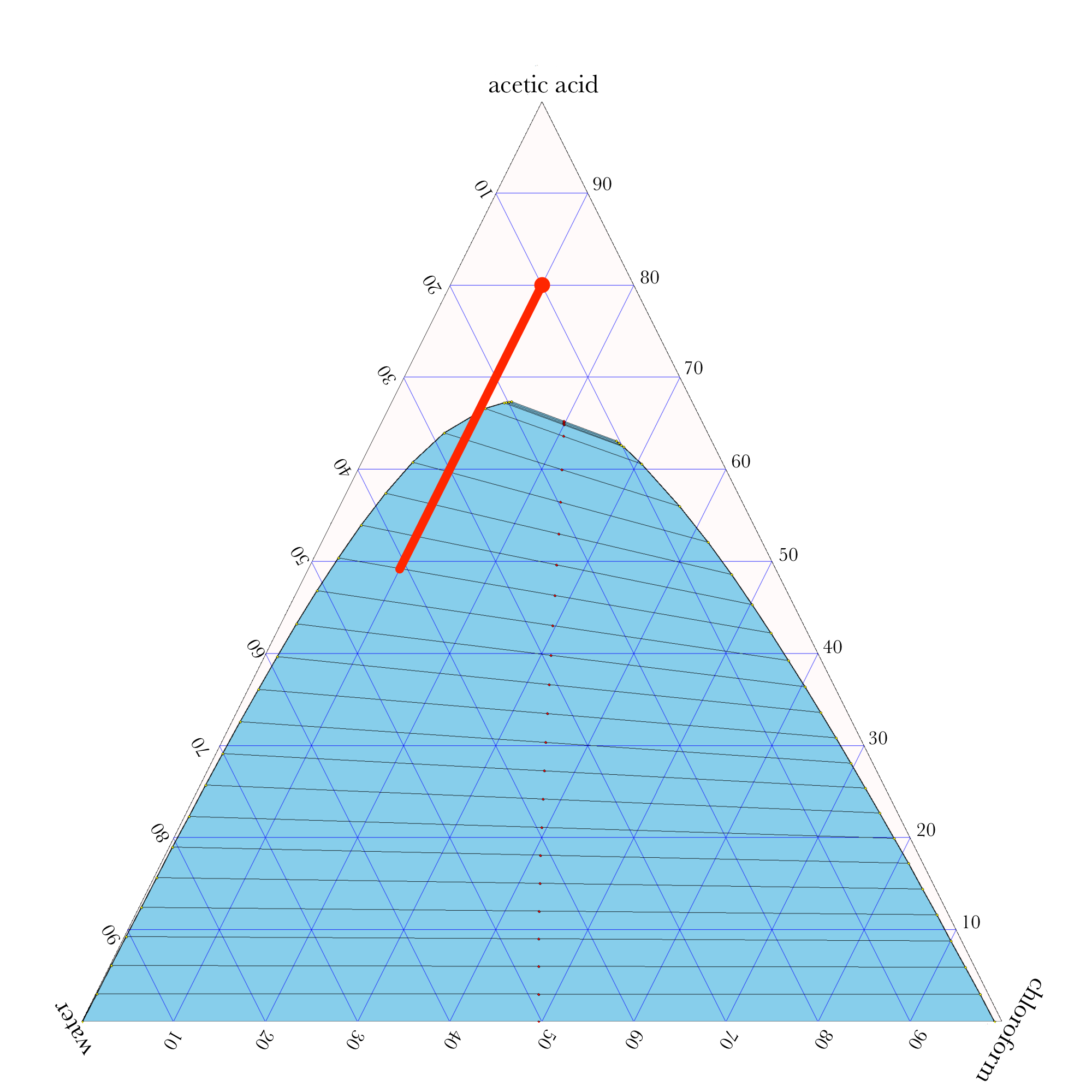
Liquid-Liquid Extraction
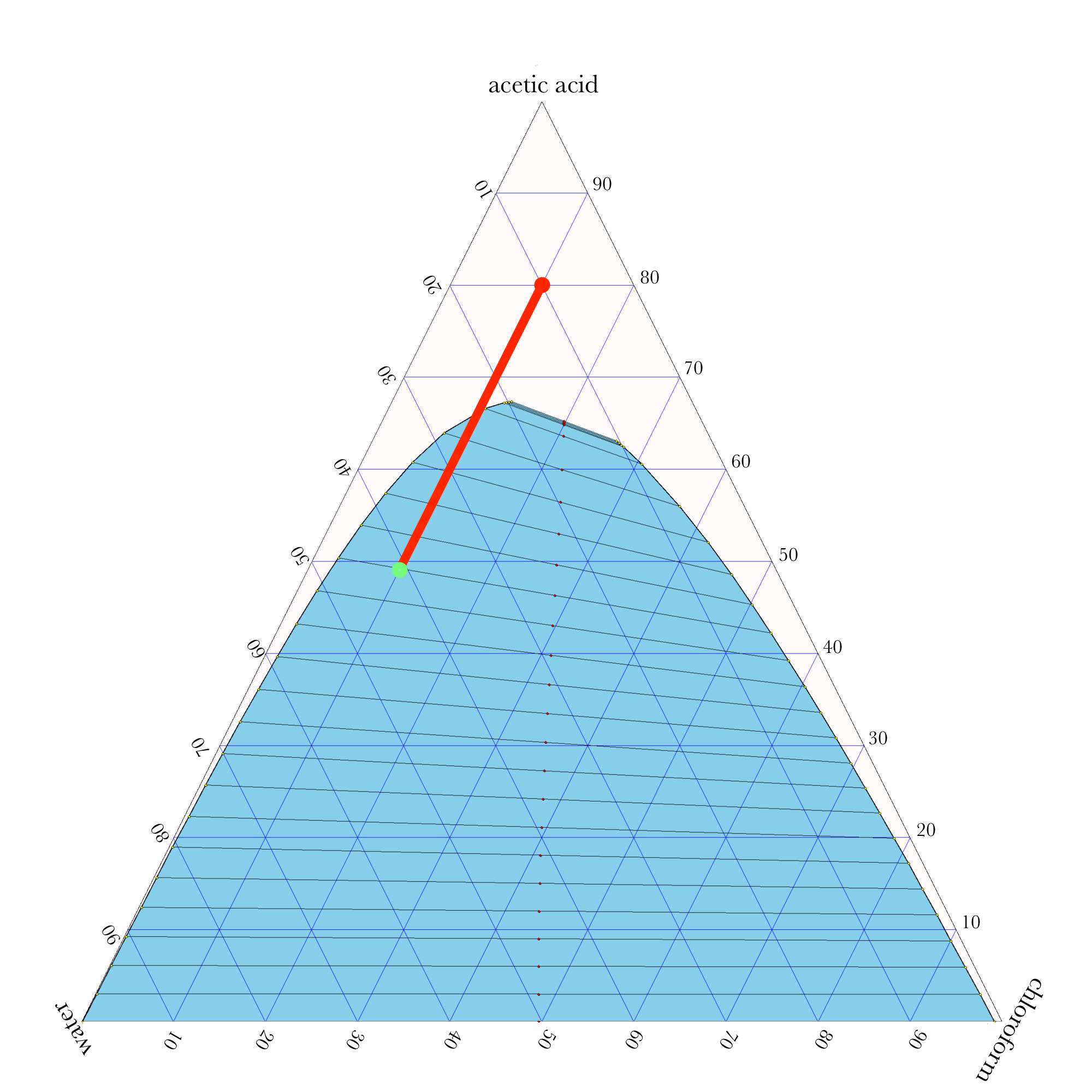
Liquid-Liquid Extraction
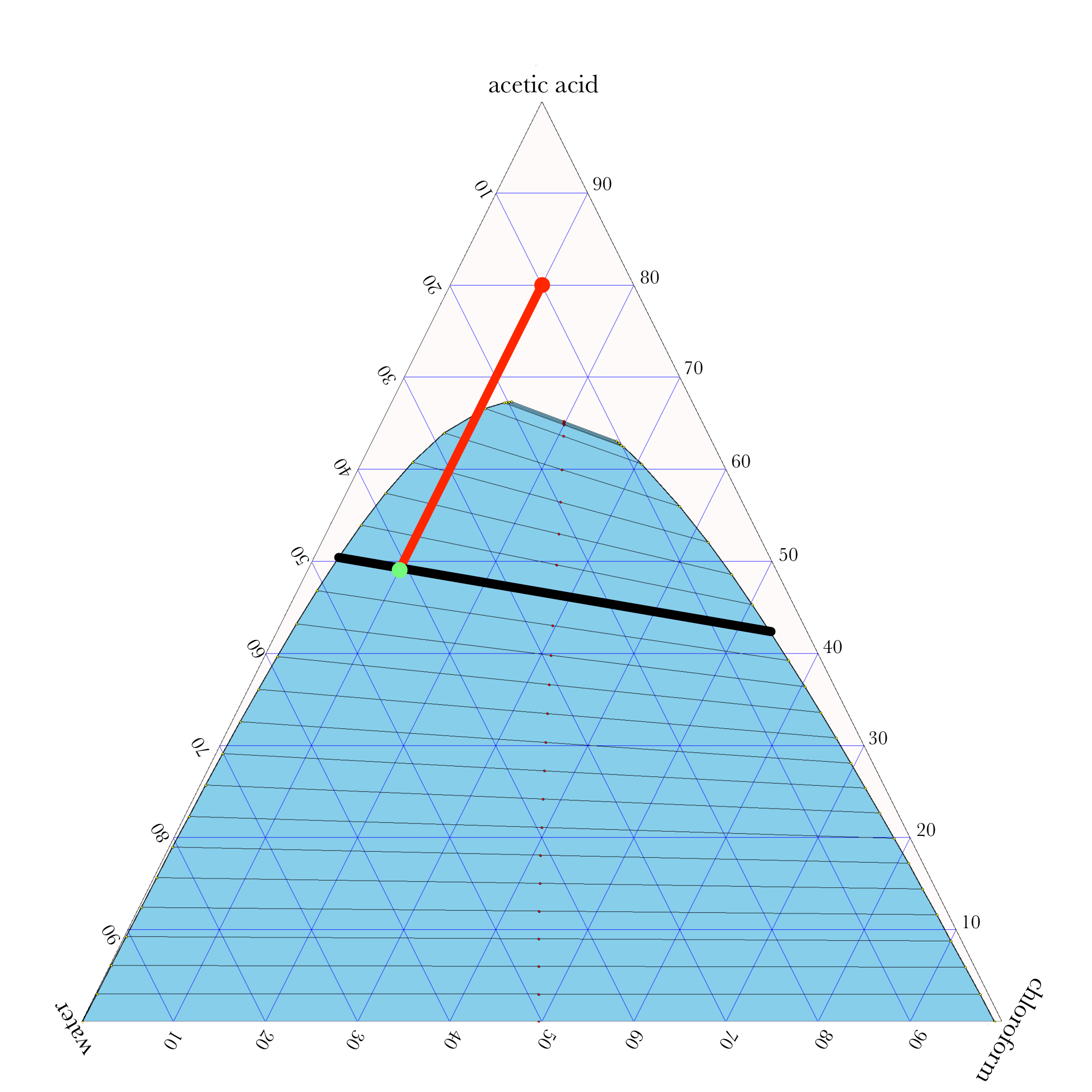
Liquid-Liquid Extraction
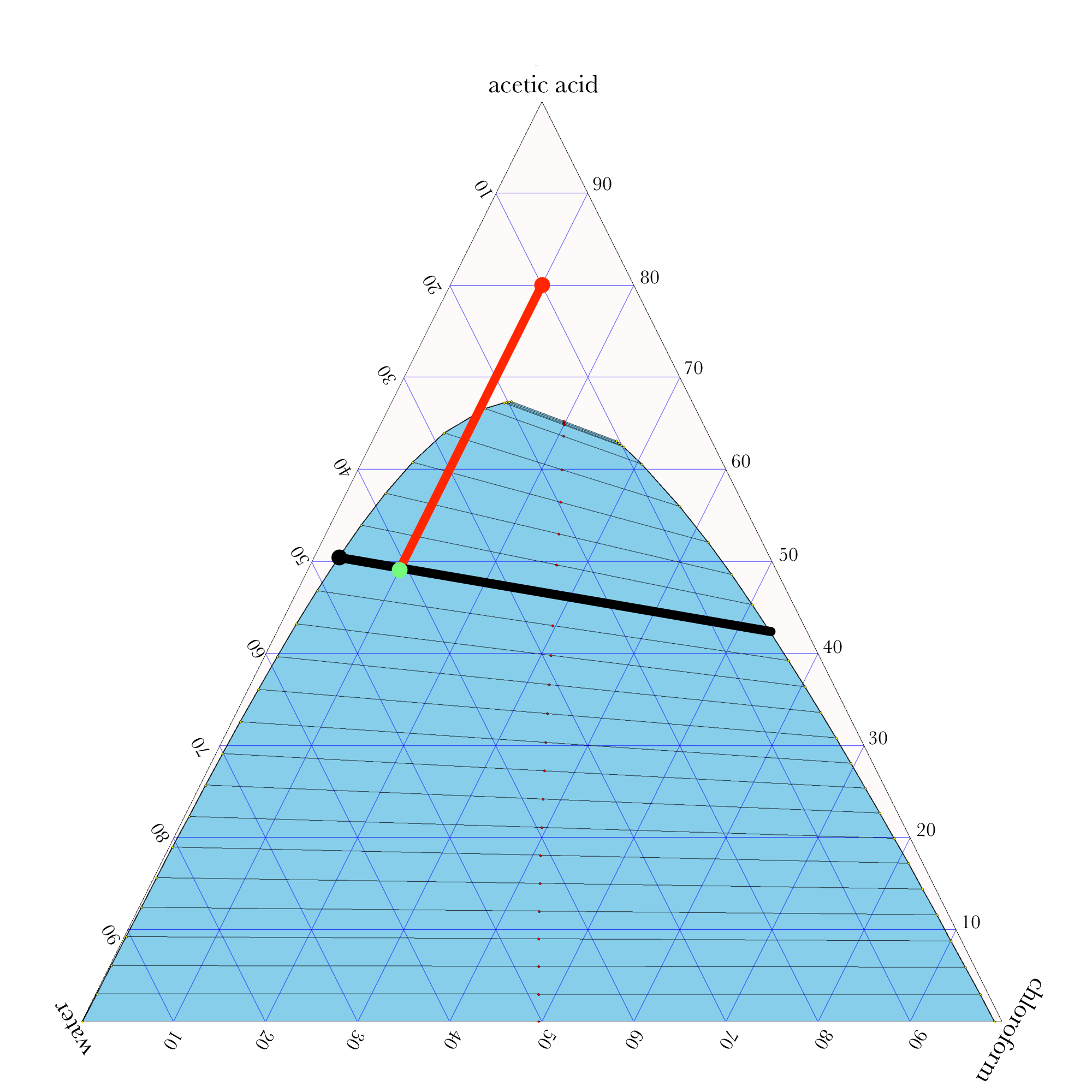
\(\phi_1\)
Liquid-Liquid Extraction
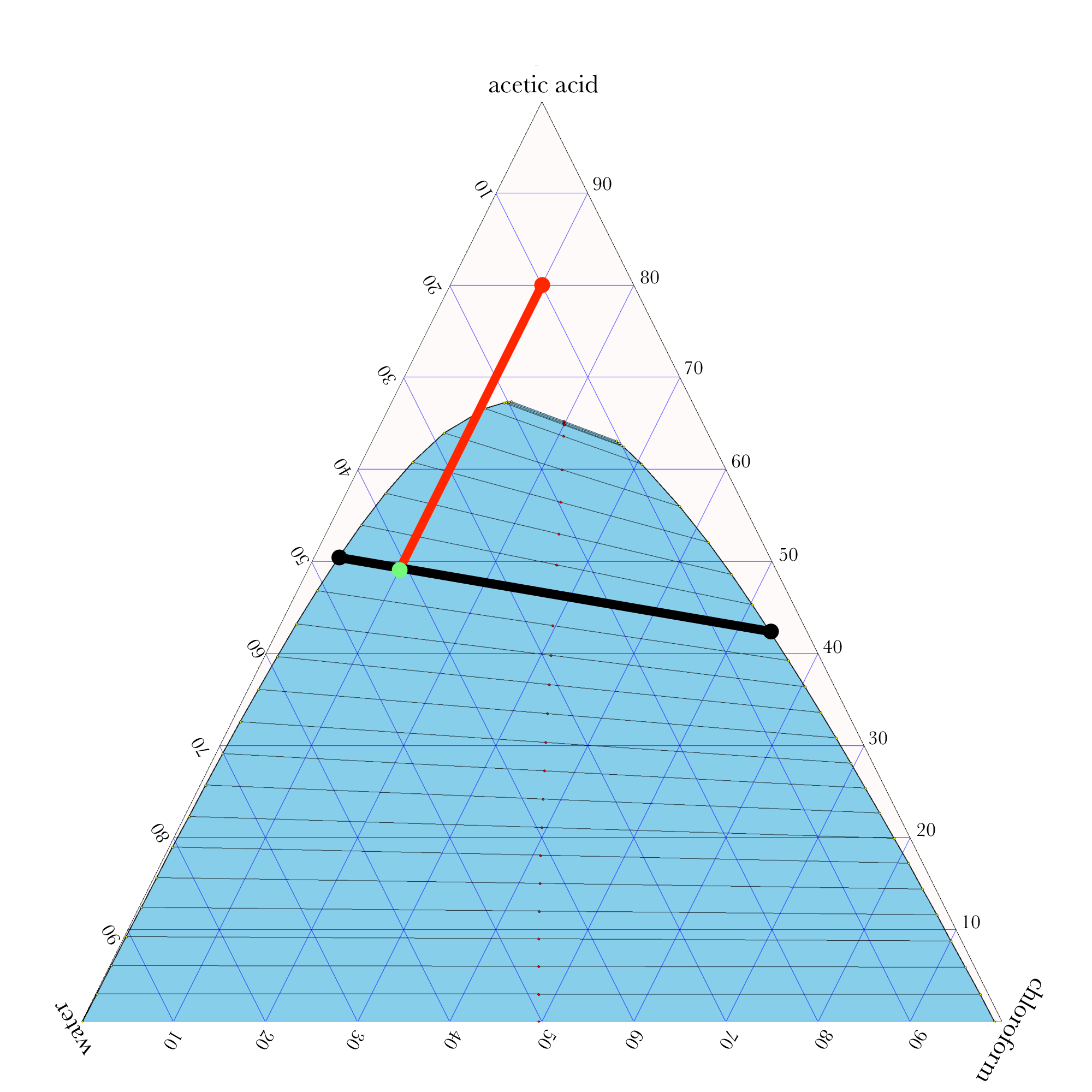
\(\phi_1\)
\(\phi_2\)
Txy and Pxy Binary Phase Diagrams
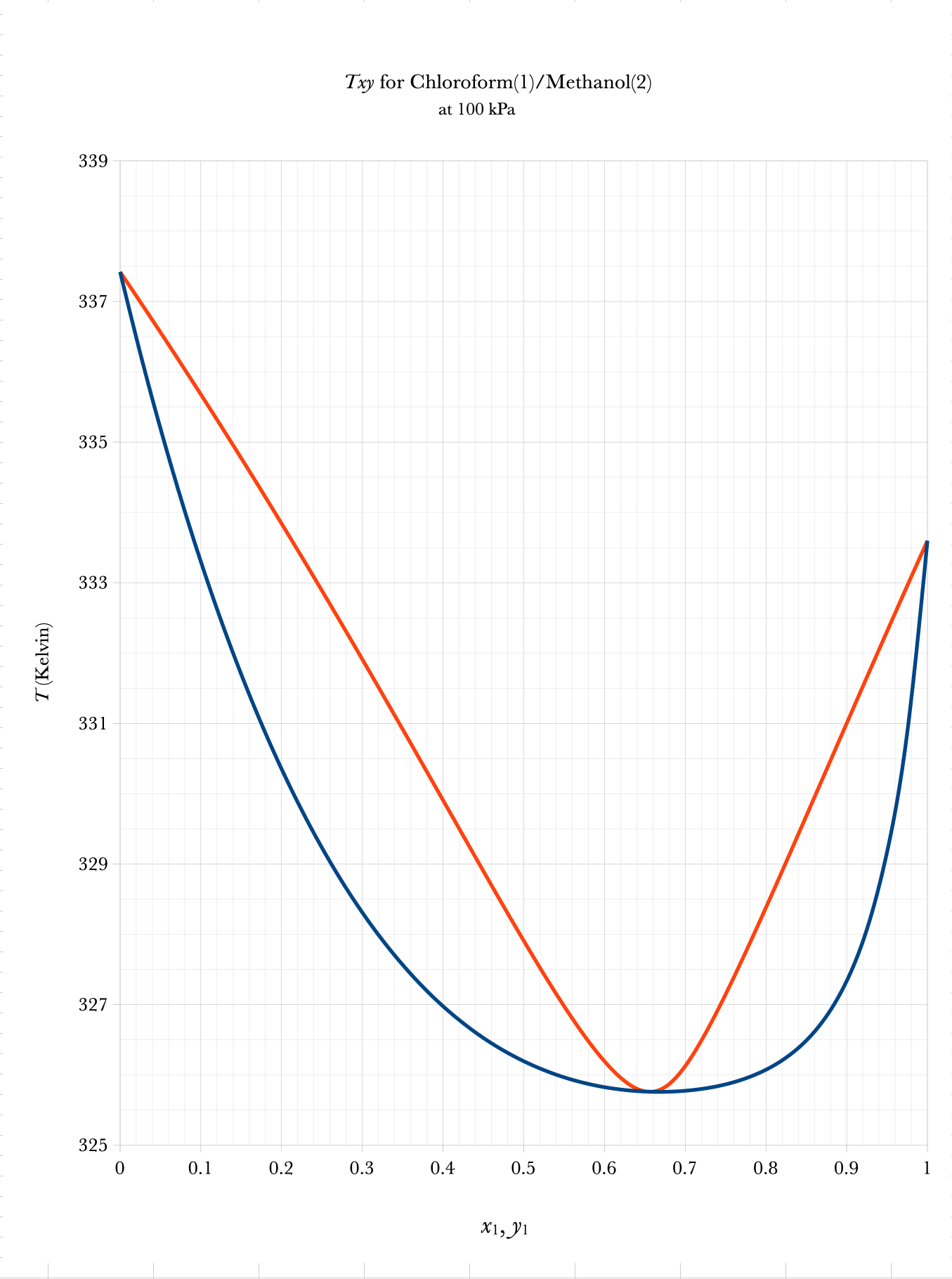
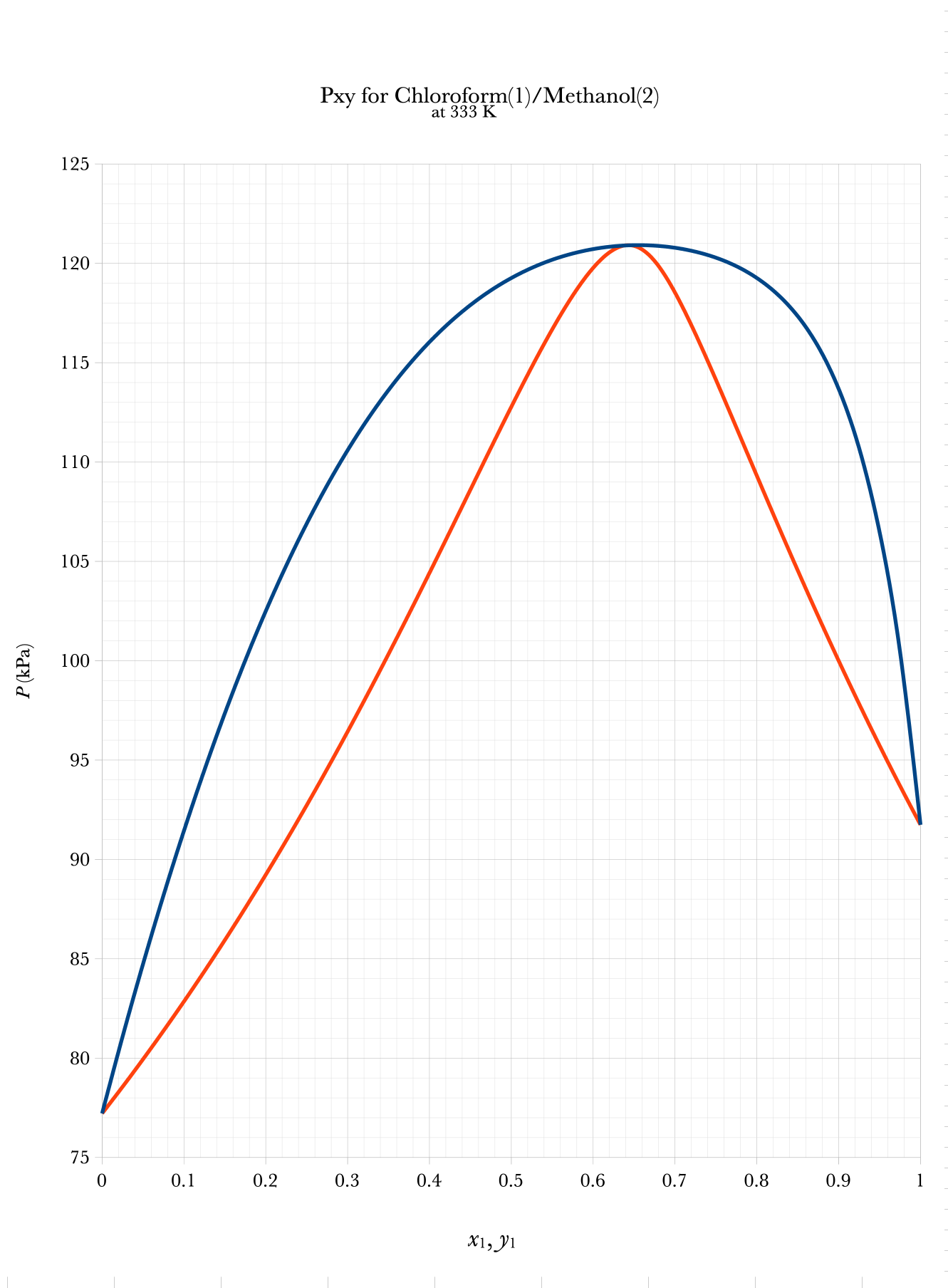
\(\mathrm{liquid}\)
\(\mathrm{liquid}\)
\(\mathrm{vapor}\)
\(\mathrm{vapor}\)
\(2\text{–}\phi\)
\(2\text{–}\phi\)
Lever Rule
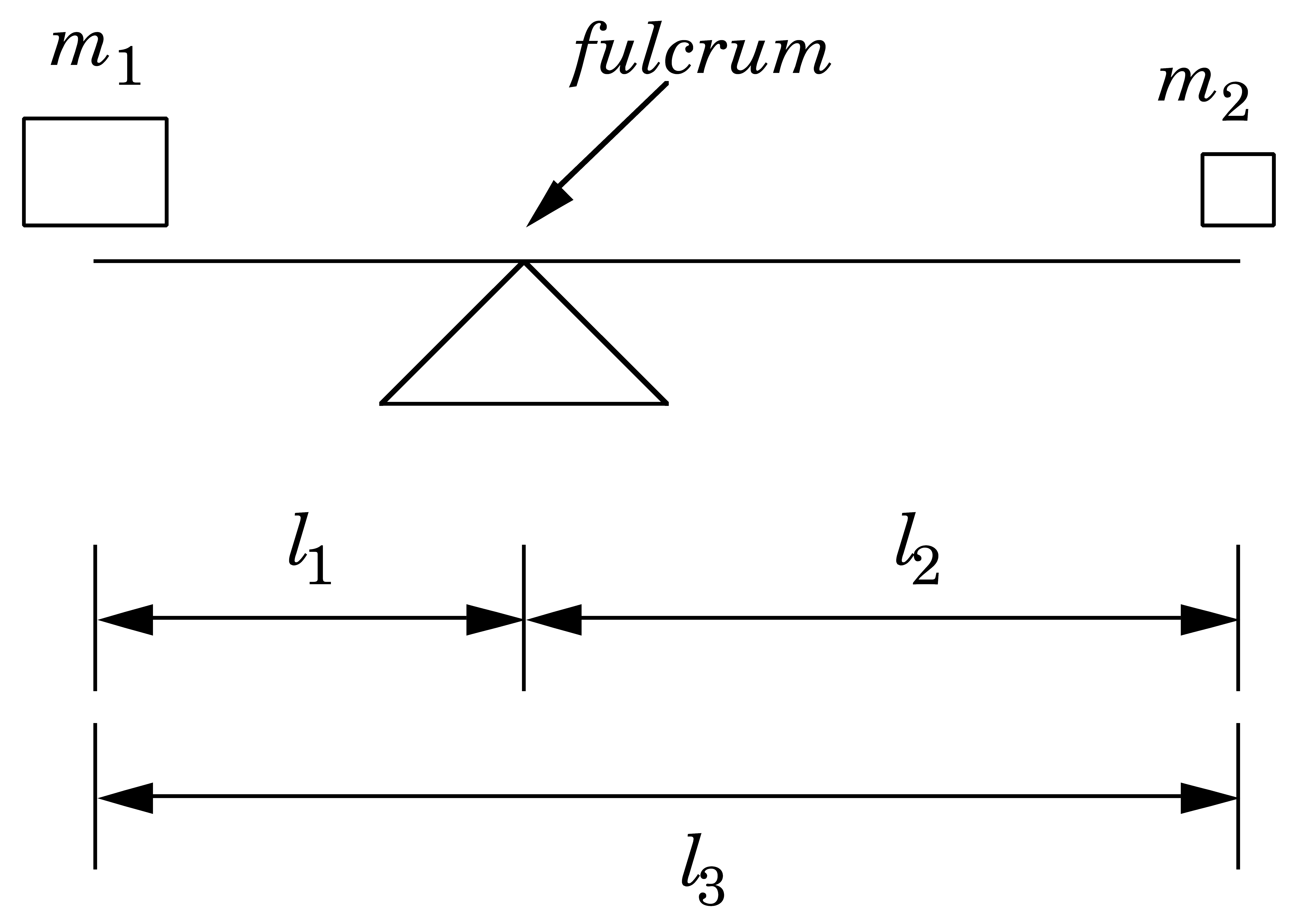
The Lever Rule for Phase Diagrams
\(\text{Phase }\alpha\)
\(\text{Phase }\beta\)
\(2\text{–}\phi\)
\(x_\mathrm{O}\)
The Lever Rule for Phase Diagrams
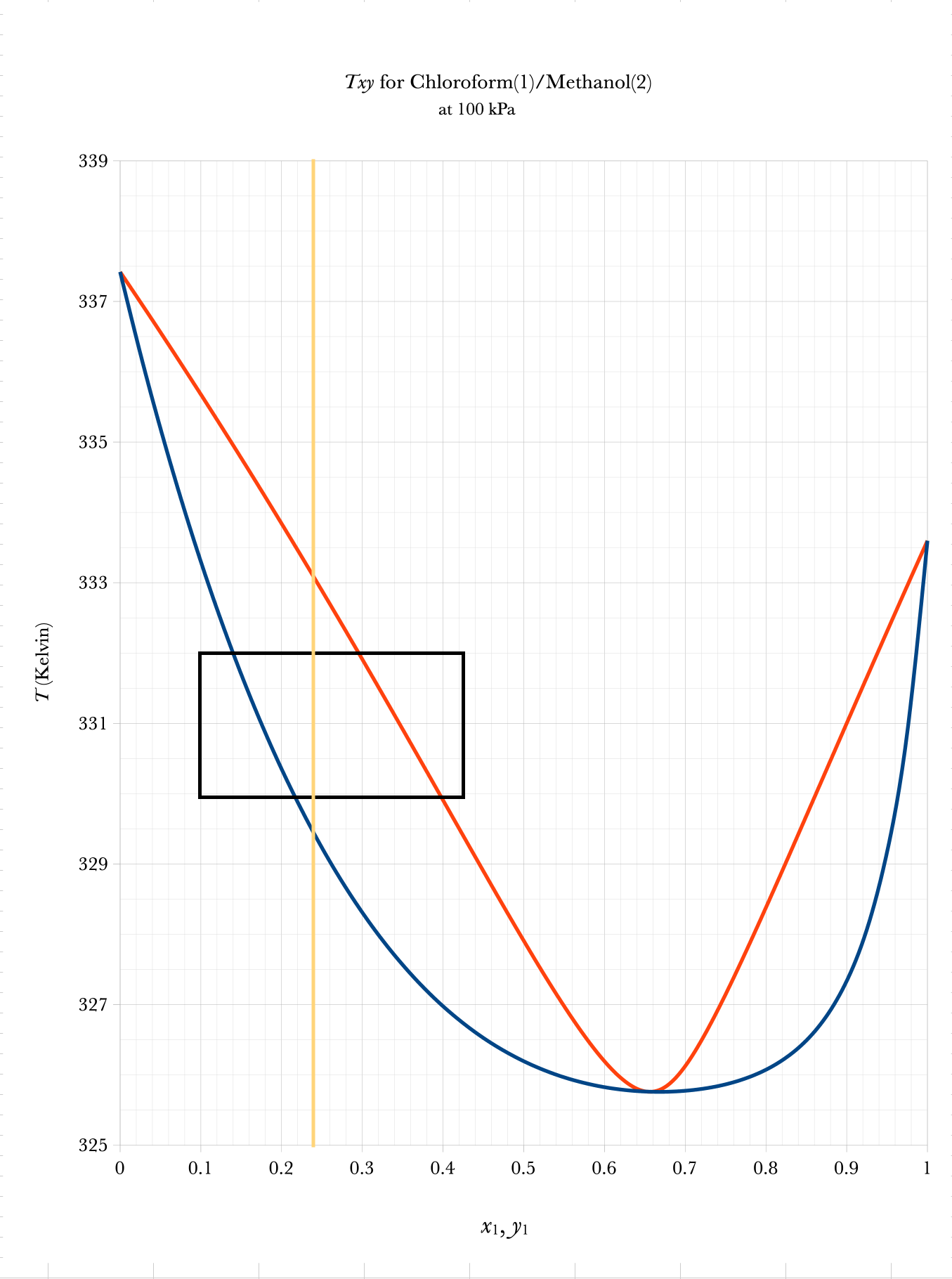
\(\text{Phase }\alpha\)
\(\text{Phase }\beta\)
\(2\text{–}\phi\)
\(x_\mathrm{O}\)
The Lever Rule for Phase Diagrams
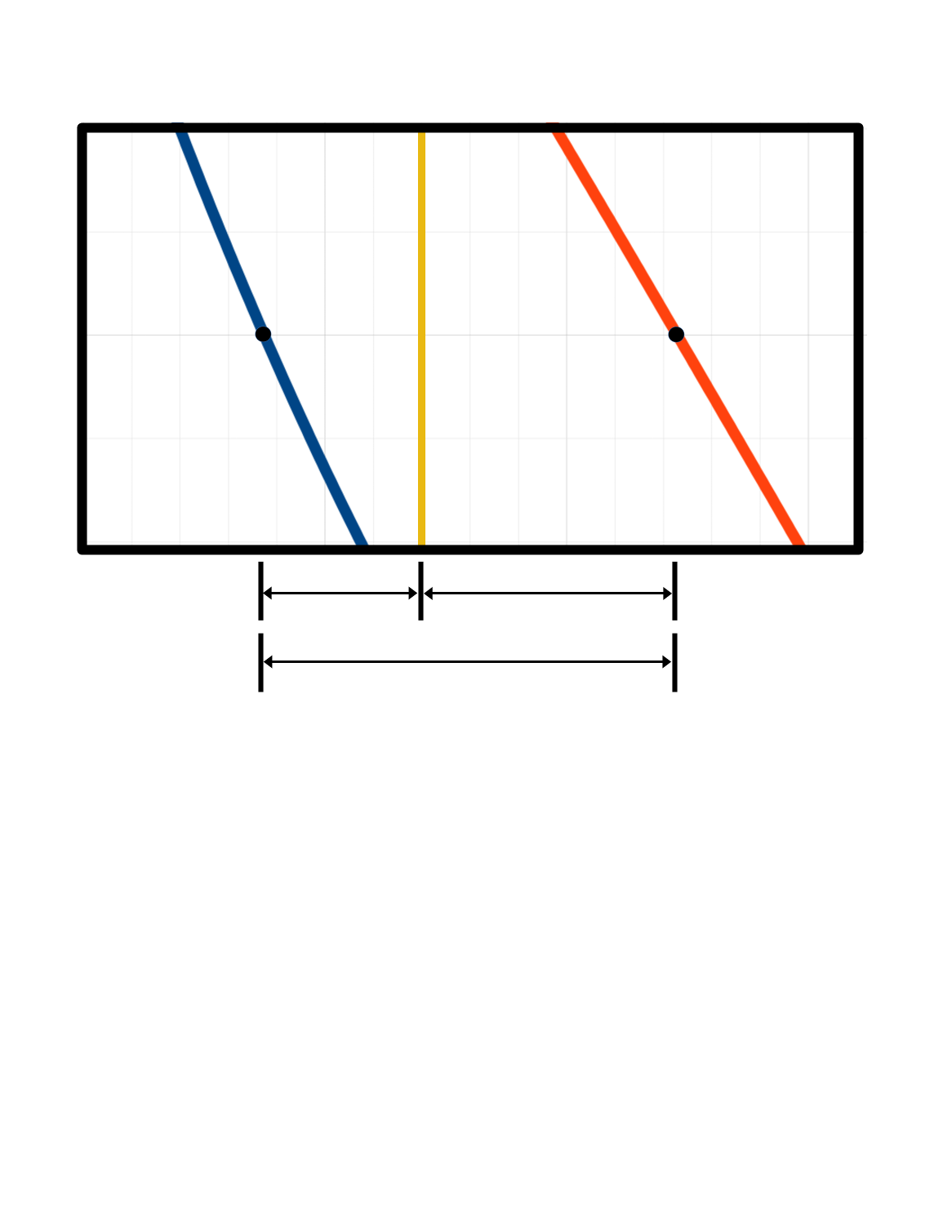
\(\text{Phase }\alpha\)
\(\text{Phase }\beta\)
\(2\text{–}\phi\)
\(x_\mathrm{O}\)
\(x_\alpha\)
\(x_\beta\)
\(l_1 = x_\mathrm{O} - x_\alpha\)
\(l_2 = x_\beta - x_\mathrm{O}\)
\(l_3 = x_\beta - x_\alpha\)
If
\(\ \ \ \ n_\mathrm{total} = n_\alpha + n_\beta\)
Then
\(\ \ \ \ n_\alpha l_1 = n_\beta l_2\)
\(\ \ \ \ \dfrac{n_\alpha}{n_\mathrm{total}} = \dfrac{l_2}{l_3}\)
\(\ \ \ \ \dfrac{n_\beta}{n_\mathrm{total}} = \dfrac{l_1}{l_3}\)
If \(\alpha\) is a liquid and \(\beta\) is a vapor, then
\(\mathcal{V} \equiv \dfrac{n_\beta}{n_\mathrm{total}} = \dfrac{l_1}{l_3}\) and \(\mathcal{L} \equiv \dfrac{n_\alpha}{n_\mathrm{total}} = \dfrac{l_2}{l_3}\)
Example
User Rune.welsh on en.wikipedia, CC BY-SA 3.0,
via Wikimedia Commons
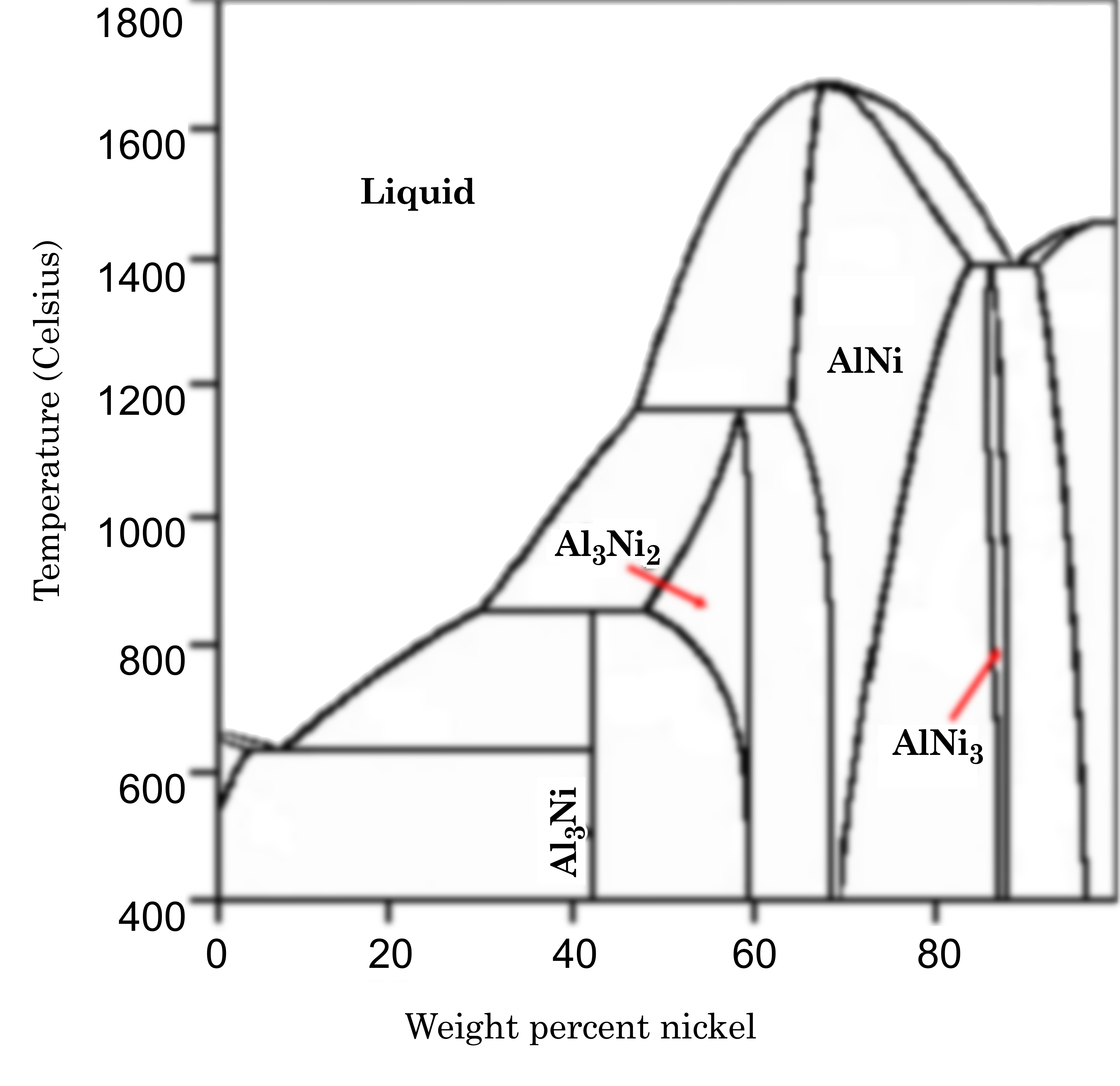
We have an equilibrium mixture of aluminum and nickel at \(1000\ ^\circ\mathrm{C}\). \(50\%\) of the overall mixture is nickel. Give the compositions and relative amounts of all phases present.
\(50\ \mathrm{mole}\% = \frac{50(58.6934)}{50(58.6934)+ 50(26.9815)} = 68.5\ \mathrm{mass}\%\)
Example Solution
User Rune.welsh on en.wikipedia, CC BY-SA 3.0,
via Wikimedia Commons
Atomic percent: 100% AlNi
Weight percent: Calc in 2-\(\phi\)
between Liquid and Al3Ni2
\(x_\mathrm{Liquid} = 36\%\)
\(x_\mathrm{Al_3Ni_2} = 57\%\)
\(\dfrac{n_\mathrm{Al_3Ni_2}}{n_\mathrm{O}} = \dfrac{x_\mathrm{Al_3Ni_2} - x_\mathrm{O}}{x_\mathrm{Al_3Ni2} - x_\mathrm{Liquid}} = \dfrac{57 - 50}{57 - 36} = 33.3\%\)
\(\dfrac{n_\mathrm{Liquid}}{n_\mathrm{O}} = 1 - \dfrac{n_\mathrm{Al_3Ni_2}}{n_\mathrm{O}} = 100\% - 33.3\% = 66.7\%\)
Thanks for watching!
The previous video in the series is in the link in the upper left. The next video in the series is in the upper right. To learn more about Chemical and Thermal Processes, visit the website linked in the description.
The DOFPro Team